Heart Health
Heart disease is the leading cause of death in Australia. Heart disease doesn’t have a single cause, but there are well understood risk factors that can increase a person's chances of developing it.
Heart disease and stroke share many risk factors - every 4 minutes, one Australian has a heart attack or a stroke. Scroll down for more information on risk factors.
The good news? Positive lifestyle changes can help to reduce the risk of heart disease as well as stroke.
A Heart Health Check is a special type of Medicare funded GP appointment. They are an excellent opportunity for taking action to reduce a person's risk of heart attack and stroke. See more on this important health check below.
Contact details
Sign up to the GPHU Mailing List
Cardiovascular diseases – heart disease, stroke and vascular disease
- Cardiovascular disease, which includes heart disease and stroke, is a leading cause of death in Australia.
- Ischaemic heart disease (or simply ‘Heart disease’) is the most common type of cardiovascular disease. This is where the blood vessels to the heart are blocked or narrowed by fatty deposits, starving the heart muscle of oxygen and nutrients. This can result in a heart attack or repeated episodes of chest pain known as angina.
- The resulting damage to heart tissue can lead to death or years of disability.
Risk factors for cardiovascular disease
- Cardiovascular risk factors include health conditions and behaviours, as well as a person’s age.
- Having many of these risk factors at the same time, further increases a person’s risk of heart disease or stroke.
- Risk factors include long-term high blood pressure, elevated cholesterol, diabetes and smoking but there are many others.
- Some risk factors can’t be changed, such as a person’s older age, but many risk factors can be improved through positive lifestyle changes.
- Sometimes medications are needed to further reduce a person’s risk of cardiovascular disease, such as blood pressure lowering and cholesterol lowering medications.
The bottom line is that heart disease and strokes can be prevented or delayed by identifying and managing risk factors earlier.
Know your risk – book a Heart Health Check
It’s possible to calculate a person’s estimated percentage chance of having a heart attack or stroke in the next five years – this can be done with your general practitioner as part of a Heart Health Check.
Knowing your level of risk helps you to make decisions about what you might want to do to reduce your risk.
What is a Heart Health Check
A Heart Health Check is a special type of Medicare funded GP appointment. They are an excellent opportunity for taking action to reduce a person’s risk of heart attack and stroke.
They can be done once a year and are free at practices that bulk bill this service - ask your GP about the cost of a Heart Health Check before your visit.
You may be asked to do some routine blood tests before you attend your Heart Health Check because the results are used in the calculator. Ask your GP about this beforehand.
Who should book in for a Heart Health Check
Anyone who doesn’t already have heart disease and is:
- aged 45-79 years
- aged 35 -79 years if you have diabetes
- aged 30 – 79 years if you are of First Nations background
What will happen during your check
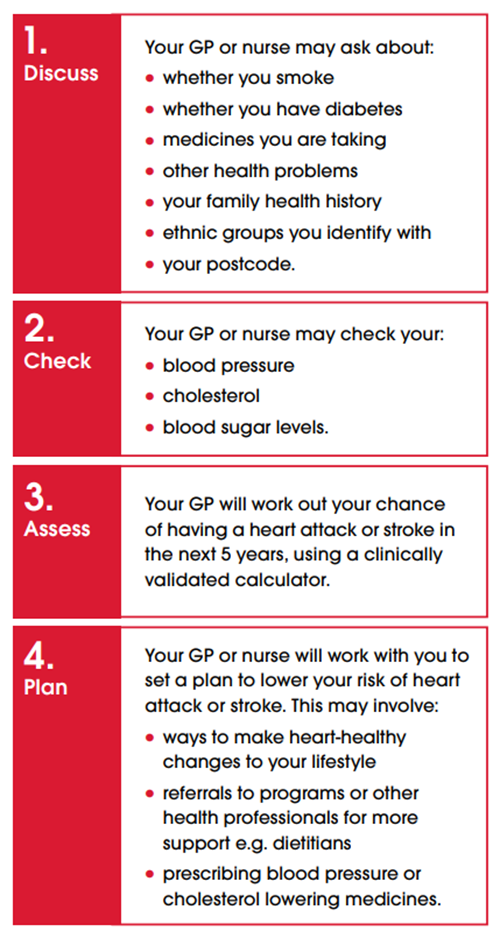
Your GP will use a special online calculator, developed for Australians, to work out your risk of having a heart attack or stroke in the next five years.
Ask your GP whether you need to have some routine blood tests before attending your Heart Health Check as the results of these tests are required for calculating a person’s five-year risk.
As part of your Heart Health Check, your GP can work with you on positive actions that you can take to reduce your risk.
Sometimes medications for high blood pressure or high blood cholesterol will be recommended by your GP if you are found to be at high risk of developing heart disease.
A Heart Health Check with your GP is a simple but important step toward understanding your risk and taking action to keep your heart healthy.
Learn more about Heart Health Checks.