Measles
Measles is a highly contagious viral illness that causes fever, cough, sore eyes, and rash. It can lead to uncommon but potentially life-threatening complications, such as pneumonia and brain inflammation (encephalitis).
What's the issue?
Measles outbreaks are increasing across the globe.
- Measles cases are rising in Victoria, mostly due to people becoming infected overseas. When travellers unknowingly bring measles back to Australia, it can spread rapidly to other people.
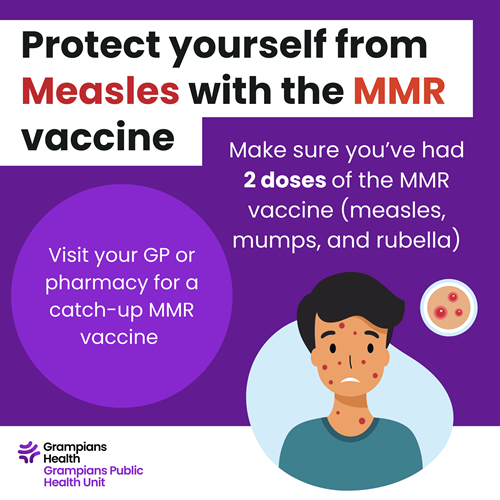
- Vaccination is the best way to protect yourself and others from measles, and two doses of the measles-mumps-rubella (MMR) vaccine is required for best, lifelong protection. The levels of immunity in Victoria are currently low, and we are at risk of measles outbreaks.
- Many adults aged 20-59 years have only had one dose of the MMR vaccine, particularly those born between 1966 and 1992 when only one MMR vaccine was part of the childhood vaccination schedule. This means they may not be fully protected against measles - and may not know it.
- People who haven’t had two doses of measles vaccine are at a much higher risk of infection and complications, particularly babies who are too young to be immunised, pregnant people and people with weakened immune systems.
How can you protect yourself and others against measles?
The Enhanced Measles Vaccination Program aims to increase measles vaccination coverage in 20-59 year olds across Victoria.
To close this gap, Grampians Public Health Unit, together with the Victorian Department of Health has launched the Enhanced Measles Vaccination program and is working with local immunisation providers to offer free MMR vaccine to all adults aged 20-59 years who have not had two doses of MMR vaccine, or are unsure of their vaccination status.
Vaccines are available at your GP, pharmacy, local council, or Aboriginal Health Service. No Medicare card is required; call ahead to discuss availability or appointment fees.
The MMR vaccine is safe and highly effective. This program is currently running until the end of June 2026.
Am I eligible for free measles vaccination?
If you are aged 20-59 years and haven’t had 2 doses—or you don’t know—get vaccinated.
- Check your immunisation records for 2 doses of measles vaccine (myGov/Medicare, old documents, baby books, blood tests, contact the provider who gave you the vaccine).
- If you haven’t had 2 doses—or you don’t know—get vaccinated. Extra doses are safe. You don’t need a blood test before you get vaccinated.
- Do not get MMR if you are pregnant or immunocompromised. If you are considering pregnancy and don’t know if you have had 2 doses, get vaccinated before you start trying. Avoid getting pregnant for 28 days after getting the vaccine.
- Travelling? See your GP at least 6 weeks before departure. Infants 6–11 months can get an early dose to protect them before overseas travel. They will need to complete the full 2-dose course of routine immunisation schedule for MMR at 12 and 18 months of age upon returning.
* Children and adolescents aged up to19 years are vaccinated against measles through routine national programs. Most adults born before 1966 (60 years and over) are likely already immune and do not qualify for vaccination under this program.
Where can I get a measles vaccine?
- Book a vaccination with your GP, pharmacy, local council, or Aboriginal Health Service.
- No Medicare card is required; call ahead to discuss availability or appointment fees.
Think you have measles? Call ahead, wear a mask, and get urgent testing.